
Official Event Program
ICEGOV 2025
Schedule for Tuesday, Nov 4
DOCTORAL COLLOQUIUM
This exclusive event is open to PhD students eager to present their ongoing research on topics related to the conference theme or tracks. It provides a unique opportunity to engage with fellow PhD students, exchange ideas on eGov themes, and receive constructive feedback on their work in a supportive environment from peers and the Colloquium Chairs. Research Accepted Legal Appraisal of Digital Carbon Governance in the Nigerian Oil & Gas Sector | Promise AguniaA Data-Driven Evaluation of Usability and Security in Nigeria's E-Government Platforms Using Computational Methods | Chimdindu Ngubo
Chair 1: Prof. Elsa Estevez
National University of the South Argentina
Chair 2: João Álvaro Carvalho
University of Minho Portugal
National University of the South Argentina, University of Minho Portugal
Room Gombe
WORKSHOP 1
The rapid advancement of artificial intelligence (AI) underscores the critical role of robust digital governance infrastructure and institutional frameworks as foundational elements for responsible, effective, and inclusive public services delivery. This workshop explores the relationship between digital government development and national AI readiness, drawing on insights from the United Nations E-Government Survey and the Oxford Insights AI Readiness Index. It examines how advanced e-Government systems—encompassing data governance, digital service delivery, and legislative frameworks and institutional capacity — shape the ability of countries to benefit from and adopt frontier technologies like AI. The discussion will focus on the role of these foundational elements highlighting the key findings of the UN E-Government Survey 2024. In addition, it will present and compare initiatives from global AI leaders, including the United States, China, the Republic of Korea, Singapore, and Canada, each of which demonstrate distinct strategies ranging from large-scale investment and innovation ecosystems to strong regulatory frameworks and citizen-centric digital services. By linking the E-Government Development Index (EGDI) with the AI readiness Index of Oxford Insights the workshop highlights that digital government infrastructure are not only prerequisites for effective AI deployment but also key enablers of trust, transparency and equity in public services delivery and the rapid adoption of frontier technologies such as AI.Ultimately, the workshop emphasizes the importance of aligning digital government strategies with AI policies to ensure that technological progress contributes to sustainable development outcomes and inclusive societal benefits.
Chair: Dr. Arpine Korekyan
United States of America
Speaker: John Lee
United States of America
Room Rivers
WORKSHOP 2
AI-enabled co-creation in evidence-based policymaking – Modelling, reflection and refinement Co-creation can raise the level of user acceptance and plausibility of services and technologies, contributing to sustainable public service provision. The use of Artificial Intelligence (AI), opening opportunities for public service innovation and citizen involvement, can enhance co-creation. In addition, developing co-creation as a core competence requires an interdisciplinary perspective which besides AI includes considerations of sustainability, evidence-based decision-making, and ethics. This paper proposes a workshop that aims to raise awareness and build a stakeholder network around the integration of AI-enabled co-creation into evidence-based policymaking. The workshop participants will explore a conceptual model designed to support the co-creation of digital public services and policies, critically examine its strengths and limitations, and share experiences from diverse institutional and regional contexts to foster international cooperation. Through an interactive dialogue, the workshop will also address the technical, societal and ethical implications of the public sector's use of AI, promoting a human-centered and value-driven approach to innovation. By bridging theory, technology and practice, the workshop will offer a platform for rigorous analysis, participatory discussion, and international knowledge exchange on the future of co-created and AI-enabled policymaking.
Chair: Prof. Nina Rizun
Gdańsk University of Technology, Gdańsk, Poland
Speaker: Noella Edelmann
Speaker: Prof. Tomasz Janowski
Gdańsk University of Technology, Gdańsk, Poland
Room Plateau
WORKSHOP 3
Too Many Pieces of the Same Puzzle: The Need for a Streamlined and Central Agency for Cybersecurity in Nigeria Nigeria's cybersecurity landscape is fragmented, with multiple agencies handling different aspects of cyber threats, governance, and digital security. This fragmented approach has led to inefficiencies, overlapping responsibilities, slow incident response, and poor enforcement of cybersecurity policies. This discussion aims examine the current state of Nigeria's cybersecurity governance, identify gaps in coordination, and either support/decline the motion to propose the establishment of a single, centralized cybersecurity agency modeled after international best practices such as France's ANSSI (Agence Nationale de la Sécurité des Systèmes d'Information) and the United States' Cybersecurity and Infrastructure Security Agency (CISA).
Chair: Dr. Nasir Baba Ahmed
Octagon Cybersecurity Nigeria Limited
Suleiman Farouk
Octagon Cybersecurity Nigeria Limited
Room Imo
LUNCH BREAK
general lunch break.
DOCTORAL COLLOQUIUM II
This exclusive event is open to PhD students eager to present their ongoing research on topics related to the conference theme or tracks. It provides a unique opportunity to engage with fellow PhD students, exchange ideas on eGov themes, and receive constructive feedback on their work in a supportive environment from peers and the Colloquium Chairs.
Chair 1: Prof. Elsa Estevez
National University of the South Argentina
Chair 2: João Álvaro Carvalho
University of Minho Portugal
National University of the South Argentina, University of Minho Portugal
Room Gombe
WORKSHOP 4
Beyond AI Consumption: Digital Governance Politics and Management in the Global South Africa is navigating a complex interplay between local needs, global geopolitics, and the corporate interests that influence the digital landscape. This is increasingly critical in public policy areas such as artificial intelligence (AI), digital infrastructure, and data governance. Competing visions on the role, applications, and future of digital technologies are converging, and distinctive but largely overlooked or misunderstood projects of nation-building and corporate consolidation have emerged, seizing digital tools as opportunities to reconfigure or strengthen power relations, sometimes in ways that are counter to individual and public rights. As this delicate balancing act between local and globalized interests plays out, the question for this Workshop is: Will the Global South and majority poor simply consume and be consumed in this "AI playground", or are there different questions to be asked and new possibilities to be considered? Drawing from a South Africa-based Working Paper series sponsored by a global development partner, this session invites critical engagement and co-thinking on digital governance futures.
Chair: Geci Karuri-Sebina
Digital Cooperation Organization (DCO)
Speaker: Kholiswa Malindini
Speaker: Beatrice Bonami
Speaker: Angella Ndaka
Digital Cooperation Organization (DCO)
Room Rivers
WORKSHOP 5
Data Intermediaries and the Future of Equitable Data Governance? As AI technologies are becoming more persistent in our lives and economies, data becomes an increasingly vital asset, urgent questions arise around who owns, controls, and benefits from it. This workshop explores the growing role of data intermediaries—such as data cooperatives and data trusts—that steward data on behalf of others, and how they can reduce power asymmetries, promote equitable digital governance and even transform collective bargaining in disrupted labour markets. We will examine models of trusted data stewardship, that balance individual rights, collective responsibilities, and the public interest. Drawing from ideas and examples of data collaboratives and public data trusts, participants will explore how intermediaries can advance transparency, accountability, and inclusion in various sectors. Through interactive sessions, we will collectively explore how intermediary models can empower communities, protect rights, and enable responsible innovation. Key questions include: What does meaningful data participation look like for workers and communities? How can intermediaries be made accountable? And what frameworks are needed to build trust in complex data value chains? This workshop invites policymakers, researchers, technologists, and civil society to collectively shape a future where data governance advances fairness, agency, and social good.
Chair: Eva Scholtes
University of Witwatersrand
Chair: Miriam Oliver
University of Witwatersrand
Room Plateau
WORKSHOP 6
Cultural Values and Online Misinformation This workshop explores the intersection of culture and misinformation, examining how cultural values shape the spread, perception, and impact of false information. Participants will analyze sources and channels of dissemination across different societies to inform a taxonomy of cultural values. The sessions will highlight both challenges and region-specific tools for combating misinformation, including fact-checking and literacy campaigns. Experts will present outcomes of the DCO "Online Content Integrity Program", including DCO Campaign to combat online misinformation, and gather feedback to refine future actions. The workshop aims to co-develop a culturally sensitive framework for countering misinformation and safeguarding digital ecosystem.
Chair: Dr. Syed Iftikhar Hussain Shah
Digital Cooperation Organization (DCO) Saudi Arabia
Speaker: Nadejda Komendantova
Speaker: Dmitry Erokhin
Digital Cooperation Organization (DCO) Saudi Arabia
Room Imo
OPENING CEREMONY
Prof. Elsa Estevez, Chair of ICEGOV Steering Committee
Inclusion NGO
Delfina Soares, Director of UNU-EGOV
Community Org
Kashifu Inuwa
Research Center
Honour to dignattaries:(Tentatively Legislator - Chairmain Senate Committee) - maybe written or video? Prof. Yinka & Lukman to review
Inclusion NGO, Community Org, Research Center
OPENING KEYNOTES
Tshilidzi Marwala
Bosun Tijani
Room Lagos
WELCOME RECEPTION
Room Lagos
Stream A:
DOCTORAL COLLOQUIUM
This exclusive event is open to PhD students eager to present their ongoing research on topics related to the conference theme or tracks. It provides a unique opportunity to engage with fellow PhD students, exchange ideas on eGov themes, and receive constructive feedback on their work in a supportive environment from peers and the Colloquium Chairs. Research Accepted Legal Appraisal of Digital Carbon Governance in the Nigerian Oil & Gas Sector | Promise AguniaA Data-Driven Evaluation of Usability and Security in Nigeria's E-Government Platforms Using Computational Methods | Chimdindu Ngubo
Chair 1: Prof. Elsa Estevez
National University of the South Argentina
Chair 2: João Álvaro Carvalho
University of Minho Portugal
Room Gombe
DOCTORAL COLLOQUIUM II
This exclusive event is open to PhD students eager to present their ongoing research on topics related to the conference theme or tracks. It provides a unique opportunity to engage with fellow PhD students, exchange ideas on eGov themes, and receive constructive feedback on their work in a supportive environment from peers and the Colloquium Chairs.
Chair 1: Prof. Elsa Estevez
National University of the South Argentina
Chair 2: João Álvaro Carvalho
University of Minho Portugal
Room Gombe
OPENING CEREMONY
Prof. Elsa Estevez, Chair of ICEGOV Steering Committee
Inclusion NGO
Delfina Soares, Director of UNU-EGOV
Community Org
Kashifu Inuwa
Research Center
Honour to dignattaries:(Tentatively Legislator - Chairmain Senate Committee) - maybe written or video? Prof. Yinka & Lukman to review
OPENING KEYNOTES
Tshilidzi Marwala
Bosun Tijani
Room Lagos
WELCOME RECEPTION
Room Lagos
Stream B:
WORKSHOP 1
The rapid advancement of artificial intelligence (AI) underscores the critical role of robust digital governance infrastructure and institutional frameworks as foundational elements for responsible, effective, and inclusive public services delivery. This workshop explores the relationship between digital government development and national AI readiness, drawing on insights from the United Nations E-Government Survey and the Oxford Insights AI Readiness Index. It examines how advanced e-Government systems—encompassing data governance, digital service delivery, and legislative frameworks and institutional capacity — shape the ability of countries to benefit from and adopt frontier technologies like AI. The discussion will focus on the role of these foundational elements highlighting the key findings of the UN E-Government Survey 2024. In addition, it will present and compare initiatives from global AI leaders, including the United States, China, the Republic of Korea, Singapore, and Canada, each of which demonstrate distinct strategies ranging from large-scale investment and innovation ecosystems to strong regulatory frameworks and citizen-centric digital services. By linking the E-Government Development Index (EGDI) with the AI readiness Index of Oxford Insights the workshop highlights that digital government infrastructure are not only prerequisites for effective AI deployment but also key enablers of trust, transparency and equity in public services delivery and the rapid adoption of frontier technologies such as AI.Ultimately, the workshop emphasizes the importance of aligning digital government strategies with AI policies to ensure that technological progress contributes to sustainable development outcomes and inclusive societal benefits.
Chair: Dr. Arpine Korekyan
United States of America
Speaker: John Lee
Room Rivers
LUNCH BREAK
general lunch break.
WORKSHOP 4
Beyond AI Consumption: Digital Governance Politics and Management in the Global South Africa is navigating a complex interplay between local needs, global geopolitics, and the corporate interests that influence the digital landscape. This is increasingly critical in public policy areas such as artificial intelligence (AI), digital infrastructure, and data governance. Competing visions on the role, applications, and future of digital technologies are converging, and distinctive but largely overlooked or misunderstood projects of nation-building and corporate consolidation have emerged, seizing digital tools as opportunities to reconfigure or strengthen power relations, sometimes in ways that are counter to individual and public rights. As this delicate balancing act between local and globalized interests plays out, the question for this Workshop is: Will the Global South and majority poor simply consume and be consumed in this "AI playground", or are there different questions to be asked and new possibilities to be considered? Drawing from a South Africa-based Working Paper series sponsored by a global development partner, this session invites critical engagement and co-thinking on digital governance futures.
Chair: Geci Karuri-Sebina
Digital Cooperation Organization (DCO)
Speaker: Kholiswa Malindini
Speaker: Beatrice Bonami
Speaker: Angella Ndaka
Room Rivers
Stream C:
WORKSHOP 2
AI-enabled co-creation in evidence-based policymaking – Modelling, reflection and refinement Co-creation can raise the level of user acceptance and plausibility of services and technologies, contributing to sustainable public service provision. The use of Artificial Intelligence (AI), opening opportunities for public service innovation and citizen involvement, can enhance co-creation. In addition, developing co-creation as a core competence requires an interdisciplinary perspective which besides AI includes considerations of sustainability, evidence-based decision-making, and ethics. This paper proposes a workshop that aims to raise awareness and build a stakeholder network around the integration of AI-enabled co-creation into evidence-based policymaking. The workshop participants will explore a conceptual model designed to support the co-creation of digital public services and policies, critically examine its strengths and limitations, and share experiences from diverse institutional and regional contexts to foster international cooperation. Through an interactive dialogue, the workshop will also address the technical, societal and ethical implications of the public sector's use of AI, promoting a human-centered and value-driven approach to innovation. By bridging theory, technology and practice, the workshop will offer a platform for rigorous analysis, participatory discussion, and international knowledge exchange on the future of co-created and AI-enabled policymaking.
Chair: Prof. Nina Rizun
Gdańsk University of Technology, Gdańsk, Poland
Speaker: Noella Edelmann
Speaker: Prof. Tomasz Janowski
Room Plateau
WORKSHOP 5
Data Intermediaries and the Future of Equitable Data Governance? As AI technologies are becoming more persistent in our lives and economies, data becomes an increasingly vital asset, urgent questions arise around who owns, controls, and benefits from it. This workshop explores the growing role of data intermediaries—such as data cooperatives and data trusts—that steward data on behalf of others, and how they can reduce power asymmetries, promote equitable digital governance and even transform collective bargaining in disrupted labour markets. We will examine models of trusted data stewardship, that balance individual rights, collective responsibilities, and the public interest. Drawing from ideas and examples of data collaboratives and public data trusts, participants will explore how intermediaries can advance transparency, accountability, and inclusion in various sectors. Through interactive sessions, we will collectively explore how intermediary models can empower communities, protect rights, and enable responsible innovation. Key questions include: What does meaningful data participation look like for workers and communities? How can intermediaries be made accountable? And what frameworks are needed to build trust in complex data value chains? This workshop invites policymakers, researchers, technologists, and civil society to collectively shape a future where data governance advances fairness, agency, and social good.
Chair: Eva Scholtes
University of Witwatersrand
Chair: Miriam Oliver
Room Plateau
Stream D:
WORKSHOP 3
Too Many Pieces of the Same Puzzle: The Need for a Streamlined and Central Agency for Cybersecurity in Nigeria Nigeria's cybersecurity landscape is fragmented, with multiple agencies handling different aspects of cyber threats, governance, and digital security. This fragmented approach has led to inefficiencies, overlapping responsibilities, slow incident response, and poor enforcement of cybersecurity policies. This discussion aims examine the current state of Nigeria's cybersecurity governance, identify gaps in coordination, and either support/decline the motion to propose the establishment of a single, centralized cybersecurity agency modeled after international best practices such as France's ANSSI (Agence Nationale de la Sécurité des Systèmes d'Information) and the United States' Cybersecurity and Infrastructure Security Agency (CISA).
Chair: Dr. Nasir Baba Ahmed
Octagon Cybersecurity Nigeria Limited
Suleiman Farouk
Room Imo
WORKSHOP 6
Cultural Values and Online Misinformation This workshop explores the intersection of culture and misinformation, examining how cultural values shape the spread, perception, and impact of false information. Participants will analyze sources and channels of dissemination across different societies to inform a taxonomy of cultural values. The sessions will highlight both challenges and region-specific tools for combating misinformation, including fact-checking and literacy campaigns. Experts will present outcomes of the DCO "Online Content Integrity Program", including DCO Campaign to combat online misinformation, and gather feedback to refine future actions. The workshop aims to co-develop a culturally sensitive framework for countering misinformation and safeguarding digital ecosystem.
Chair: Dr. Syed Iftikhar Hussain Shah
Digital Cooperation Organization (DCO) Saudi Arabia
Speaker: Nadejda Komendantova
Speaker: Dmitry Erokhin
Room Imo
Meet Our Distinguished Speakers
Learn from global thought leaders, policymakers, and innovators shaping the future of digital governance

Digital Governance Expert
Gdańsk University of Technology Poland
Tomasz Janowski is the Head of the Department of Informatics in Management, Faculty of Economics and Management, Gdańsk University of Technology, Poland; Invited Professor at the Department for E-Governance and Administration, Faculty of Business and Globalization, Danube University Krems, Austria; and Co-Editor-in-Chief of Government Information Quarterly, Elsevier. Previously, he was Invited Professor at Università Della Svizzera Italiana, Switzerland and University of Minho, Portugal; founding Head of the United Nations University Operating Unit on Policy-Driven Electronic Governance (UNU-EGOV), Portugal; and Research Fellow and Senior Research Fellow at the UNU International Institute on Software Technology (UNU-IIST), Macau, China. At UNU, he founded and directed for 12 years the digital government program, which conducted research and development activities in 61 countries around the world. Among them, he established the International Conference on Theory and Practice of Electronic Governance (ICEGOV) and organized 10 ICEGOV editions in Macao, Cairo, Bogota, Beijing, Tallinn, Albany, Seoul, Guimarães, Montevideo and New Delhi. He also co-chaired the e-Government Interest Group at the World Wide Web Consortium (W3C); was a member of the UN expert group on e-Government Survey; and was the chief jury of the Omani and Saudi Arabian national awards in e-Government. His research interests include digital government, development informatics, sustainable digital transformation, and digital transformation for sustainability. He is an author or co-author of over 270 publications including academic publications and technical and policy reports prepared for such organizations as the Commonwealth Telecommunication Organization (CTO), European Commission, International Development Research Center (IDRC), Inter-American Development Bank (IADB), International Telecommunication Union (ITU), Macao Foundation, Microsoft, Organization for Security and Co-operation in Europe (OSCE), United Nations Development Programme (UNDP), United Nations Educational, Scientific and Cultural Organization (UNESCO) and the World Bank, and for governments in Africa, Asia, Latin America and the Pacific. His academic qualifications include Habilitation in Management Sciences (equivalent), Gdańsk University of Technology; PhD in Computer Science, University of Warwick; and MSc in Mathematics, University of Gdańsk.

Senior Advisor for Digital Transformation & Innovation Policies
United Nations ESCWA
Idlebi is a senior expert on Digital Transformation, Technology for Development, Innovation Policy, Knowledge Society, and Digital and Open Government. She is currently working as a regional advisor for the Arab ICT Organization (AICTO), and a consultant to the UN and other international organizations. She is also a member of the advisory board of 01Gov and board of trustees of the Syrian Computer Society. She has more than 20 years of experience with the United Nation Economic and Social Commission for Western Asia (UN-ESCWA) from September 2004 to January 2025. She occupied several high positions at UN-ESCWA. Her latest position was the Director of Statistics, Information Society, and Technology. Her work covered various sectors related to digital transformation, Digital and Open Government, ICT Policy, ICT Applications for Development. She also led many regional initiatives related to cyber legislation for building a knowledge society, the regional profile of information society in the Arab region, digital Arabic content and fostering open government for achieving the 2030 Development Agenda. Furthermore, she led for 5 years various activities related to Innovation policy for sustainable development and Innovation for promoting entrepreneurship among Arab youth and women. Before joining ESCWA, from 2002 to 2004, she was Deputy Minister at the Ministry of Communications and Technology (MCT) in her home country Syria. During this period, she supervised Information and Communication Technology and International Cooperation activities. She also participated in the formulation of the National ICT Strategy for Social and Economic Development. Idlebi worked at the Higher Institute of Applied Science & Technology (HIAST) in Damascus/Syria for more than 8 years as college professor, and she was the manager of cooperative projects between the European Union and HIAST. Moreover, she was a Board Member of the Syrian Computer Society (SCS) from 1997 to 2002 and she led the professional training programs at SCS and the national program for ICT training. She has an engineering degree from "Ecole Supérieure d'Electricité (Supelec)", a "Diplome d'Etudes Approfondies (DEA) from ENSIMAG and a Ph.D in computer science from Nancy 1 University in France with a specialization in Parallel Processing and Distributed Systems.

Head of Computer and Information Sciences Department
Covenant University Nigeria
Aderonke A. Oni, holds B.Sc, M.Sc and Ph.D in Management Information Systems. Her areas of research interest include business analytics, e-business and government, technology adoption, system and data modeling, design theories for information systems, and Software engineering. She is a Professor of Management Information Systems and the Head of Computer and Information Sciences Department of Covenant University, Ota, Ogun state, Nigeria.

Professor
Ahmadu Bello University Nigeria
Junaidu is an accomplished and seasoned academic and professional with extensive local and international experience in diverse areas of Computing. He is a Professor of Computer Science and received his training at Ahmadu Bello University, Zaria, Nigeria; Queen Mary & Westfield College, University of London; and St. Andrews University, Scotland. He worked at St Andres University, Scotland (part-time), at Universiti Telekom Malaysia for one year, at King Fahd University of Petroleum & Minerals (KFUPM), Dhahran, Saudi Arabia for nine years, and at Ahmadu Bello University, Zaria, Nigeria since 2008. He supervised several undergraduate and postgraduate students at these universities. He was a major resource person in many developmental and academic programs at the places he worked. At King Fahd University, he co-led the design, development and delivery of the first successful online courses in that university, around 2002, led curriculum development efforts and won the KFUPM's prize of Instructional Technology Award in 2004. At ABU Zaria he held the positions of Head of Department, Dean, Chairman of Complex of 6 years, and ICT Director for over ten years. He served on several committees and was the mentor of many students' groups that competed and won prizes, including a regional HULT PRIZE competition. He led a team of over twenty-five personnel that developed and still maintain over a dozen suites of software applications used in ABU and other universities across Nigeria today. He received many awards and distinctions including Best Graduating Student of Diploma in Mathematics Education, Best Second Year Student and Best Graduating B.Sc. Computer Science Student, ABU Vice Chancellor's Merit Award in 2014, scholarship award by the ODASSS (Overseas Development Association Shared Scholarship Scheme) for M.Sc. study to University of London and Nigerian Government Scholarship award for Ph.D. study to St. Andrews University, Scotland. He also won other merit awads at KFUPM as well as students' awards at ABU Zaria. Junaidu is a Life Member of the ACM (Association of Computing Machinery), a Member of IEEE, CPN (Computer Professionals Registration Council of Nigeria) and NCS (Nigeria Computer Society)..

Dean
University for Development Studies Ghana
Ibrahim Osman Adam is Dean of the School of Business and Professor of Management Information Systems at the University for Development Studies. His research interests center on digital technologies within business and innovation. He focuses specifically on e-commerce, e-government, social media, and broader digital transformations, and dedicates a significant portion of his research to understanding the intricate connections within the ICT4D (Information and Communication Technology for Development) value chain. Adam examines ICT readiness, access, use, and impact across diverse business and societal contexts. His academic credentials include a PhD in Information Systems from the University of Ghana Business School, and dual master's degrees from the London School of Economics and Political Science (LSE) and Henley Business School, University of Reading. Furthermore, he is a Chartered Accountant with the Institute of Chartered Accountants (Ghana)..

Senior Lecturer
Federal University Oye-Ekiti Nigeria
Ekele Alih is a Senior Lecturer in Statistics at the Federal University Oye-Ekiti, Nigeria, with over two decades of experience teaching undergraduate and postgraduate courses. He holds an HND, B.Sc., PGD, M.Sc., and PhD in Statistics. His research spans multivariate methods—particularly clustering and classification—probability distributions for modeling outliers and extreme events, regression, density estimation, statistical quality control, and health statistics. Alih's current focus lies in Bayesian hierarchical models for adaptive platform trials, including methodologies for incorporating real-world evidence and observational data to augment clinical trials. His mission is to advance biostatistical tools for flexible classification and robust prediction in settings marked by uncertainty. Proficient in R programming, he develops bespoke implementations of statistical models. His work reflects a blend of theoretical innovation and applied relevance, aligning with efforts to measure and enhance decision outcomes with a methodological depth and interdisciplinary perspective to evaluating success metrics.
Distinguished Professor
Federal University Oye-Ekiti Nigeria
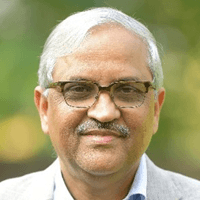
EProf. Harekrishna Misra, PhD in Information Systems, is currently Distinguished Professor at School of Management, BML Munjal University, Haryana, India. He was earlier with Institute of Rural Management Anand (IRMA), a School of Tribhuvan Sahakari University (A University of national importance of GoI), as Professor, IT & Systems, and served as its chair professor at Verghese Kurien Centre of Excellence. He was chair person, iSTED, DST, GoI, that works for science and technology-oriented entrepreneurship. He is Member, Expert Advisory Committee to draft the National Cooperation Policy under the chairmanship of Shri Suresh Prabhu. He is member, governing body of national council of cooperative training (NCCT), GoI. He is member of the BoG of Sahaj Retail limited, dealing with e-Governance service deliveries in India. He closely works in the area of rural e-Governance and measurements for readiness of connected services.

Founder of Data Science Nigeria and Co-Founder of EqualyzAI
Data Science Nigeria/EqualyzAI Nigeria
Olubayo Adekanmbi is a globally recognised artificial intelligence expert and innovation strategist, widely acknowledged as a leading voice in Africa's AI-for-development landscape. With over 24 years of executive and technical experience, he leads transformative work as Founder of Data Science Nigeria and Co-Founder of EqualyzAI, where he champions inclusive, agentic AI tailored for emerging markets. He holds a PhD from the University of London, with further executive training at Columbia, INSEAD and ETH Zurich. His AI innovations have earned international accolades from UNESCO and the Bill & Melinda Gates Foundation. Adekanmbi previously led data, analytics and innovation as a C-level executive at MTN Nigeria and Airtel Africa UK - Africa's two largest telecommunications companies - serving more than 300 million users across over 30 countries. A key contributor to Nigeria's National AI Policy, he actively engages with global tech leaders such as Google, Meta, Microsoft and GSMA. He is also a published scholar and highly ranked data scientist dedicated to advancing Africa's AI talent, innovation and policy ecosystem.
The Venue
Yar'Adua Centre Plot 1161 Memorial Drive, Wuse, Abuja 904101, Federal Capital Territory
The ICEGOV 2025 will be held at the Yar'Adua Centre Plot 1161 Memorial Drive, Wuse, Abuja 904101, Federal Capital Territory.